
-
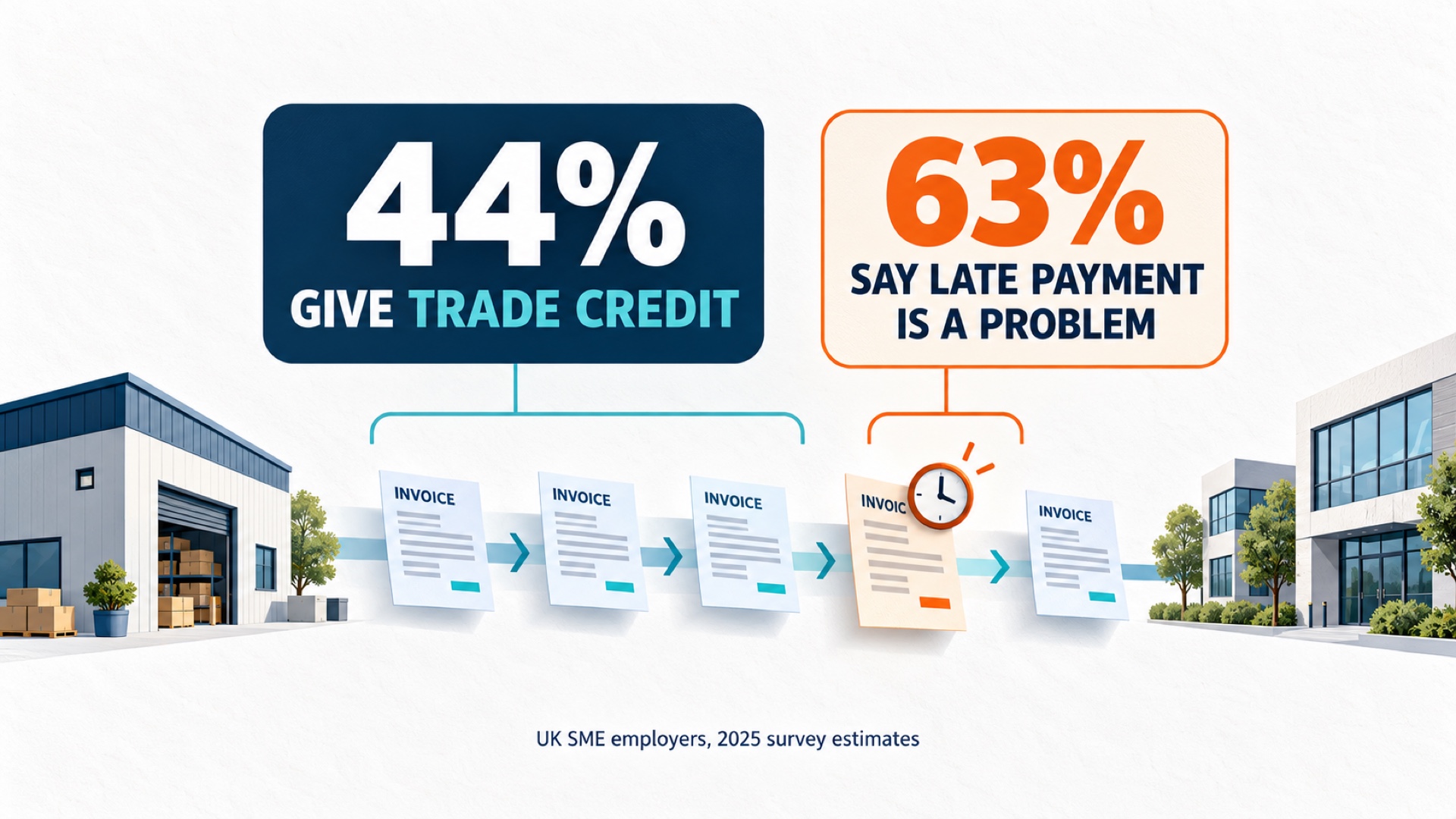
A government survey estimates that 63% of UK SME employers offering trade credit regarded late payment as a problem in 2025, up six percentage points on 2024.
-

ONS estimates UK GDP grew by 0.1% in August 2026 and 0.7% over three months. Production rose during the month, services were flat and construction fell, pointing to uneven business conditions.
-

A survey of 682 UK firms reports weak hiring confidence and pressure on training and investment intentions as businesses assess rising employment costs.
-

The IMF now forecasts 1.3% UK growth in 2026 and 1.2% in 2027. We explain what the projections may mean for SME demand, costs, cash flow and funding decisions.
-
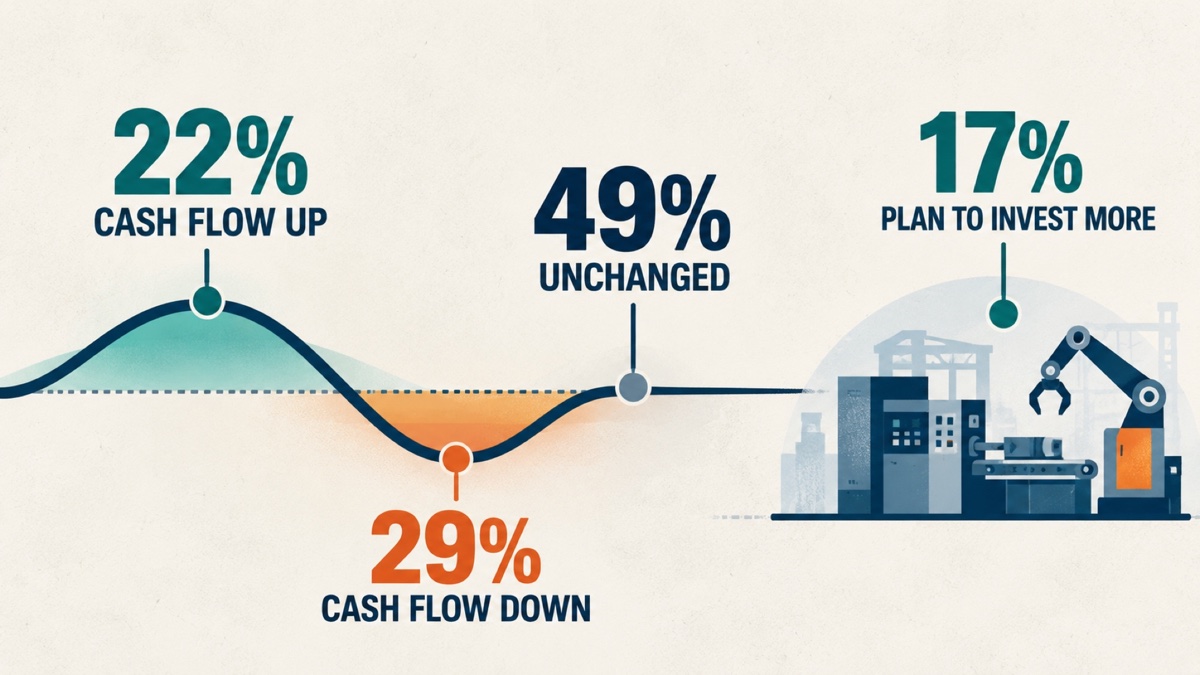
UK business surveys show cash flow remained negative overall among respondents while lenders reported reduced credit availability for small and medium-sized firms in Q3 2026.
-

ONS data shows UK business concern about energy and fuel prices reached the highest levels recorded in the current survey series. We examine what the figures do—and do not—mean for working-capital planning.
-
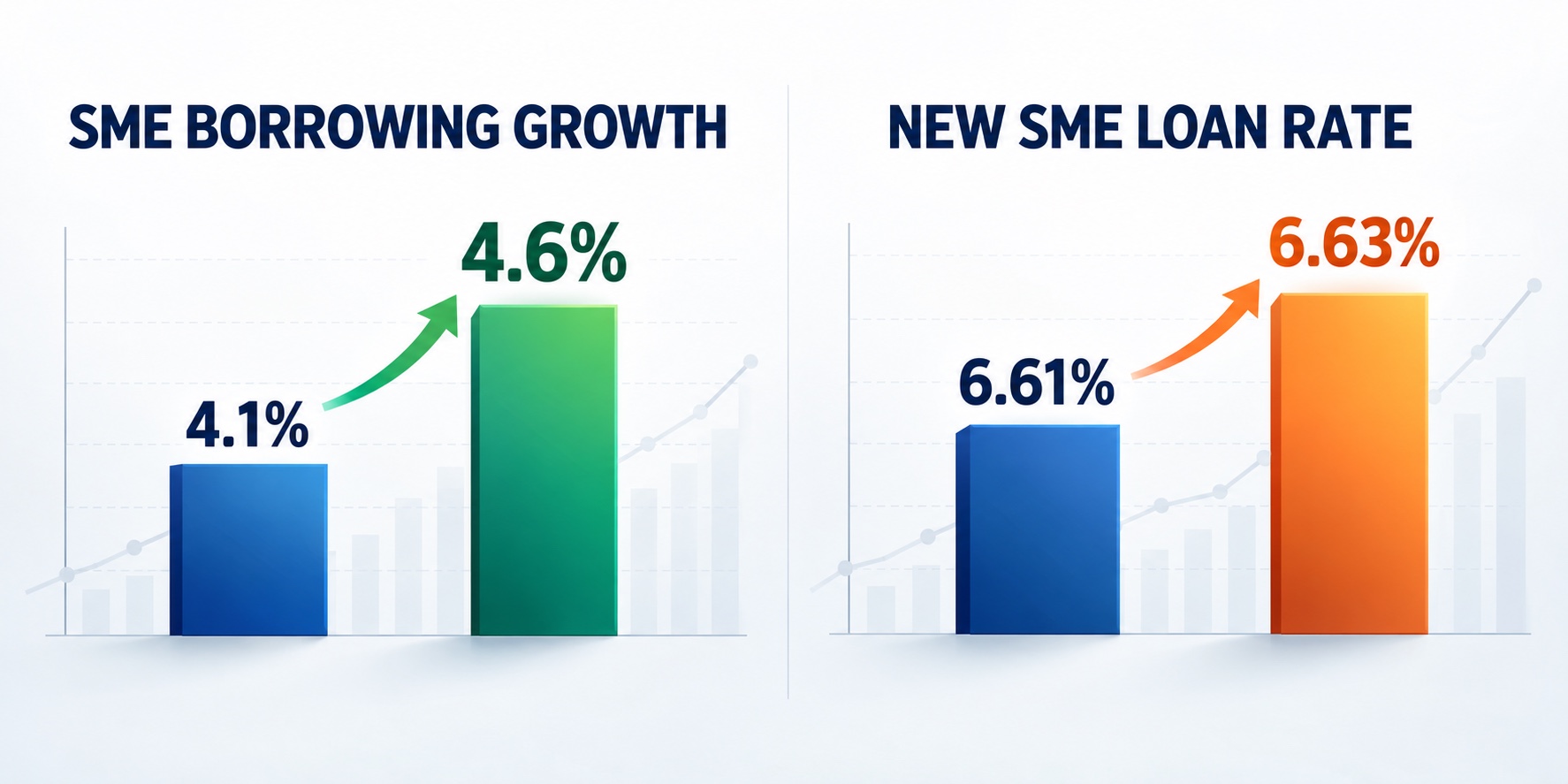
Bank of England data shows SME borrowing growth reached 4.6% in August 2026 while the effective rate on new SME bank loans rose to 6.63%.
-

The Commercial Payments Bill cleared House of Lords report stage on 15 September 2026 with its 60-day payment cap intact. Here’s what that means for SME cash flow and invoice finance while implementation remains 18 months away.
-

Gross lending to UK small and medium-sized businesses reached £5.35 billion in the second quarter of 2026, its highest quarterly level since the pandemic. However, heavier use of overdraft facilities and a fall in applications during the quarter suggest that the headline increase does not tell a simple story of rising confidence. The figures were…
-

The Bank of England says UK credit supply exceeds demand, but lenders still prefer larger clients. We examine what this means for invoice discounting, asset finance and SME borrowing choices.