
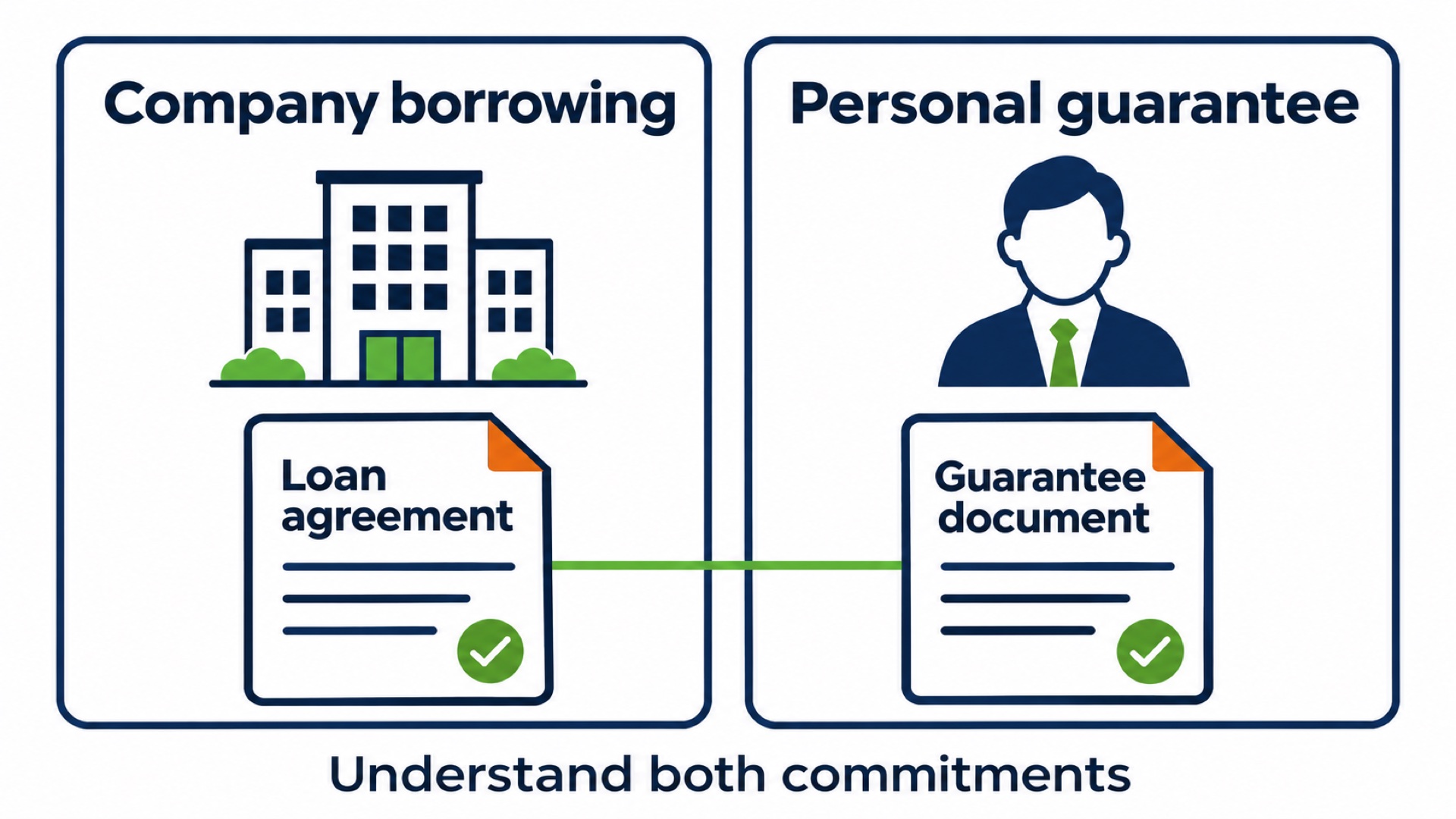
Yes, a business loan described as unsecured may still require a director’s personal guarantee. The two questions are different: what security supports the company’s borrowing, and what separate commitment an individual is being asked to give.
For a limited-company owner comparing finance, the useful question is therefore: what would I personally be responsible for under these documents? The answer needs to come from the written terms, rather than the product label alone.
What is a personal guarantee?
The Insolvency Service’s guidance for directors describes a personal guarantee as a legally binding agreement to repay company debt if the company fails to meet the relevant obligations. It warns that the guarantor’s personal assets may be exposed to claims.
A guarantee can itself be secured or unsecured. The guidance distinguishes a guarantee backed by a specific asset from one based on the individual’s creditworthiness. An unsecured guarantee can still create personal liability.
This article concerns company owners and directors considering a guarantee. Sole traders and partnerships have different liability arrangements and should not assume that the same explanation applies to their borrowing.
Why can a lender ask for one?
A personal guarantee can help a lender manage the risk of the business not repaying. The Insolvency Service notes that requests are more likely with a new company, a limited trading history, poor or no credit rating, or a significant transaction. That does not establish that every lender or loan requires one.
When comparing proposals, record the guarantee requirement alongside the amount available, fees, repayment dates and other conditions. A lower monthly payment is only one part of the decision if the personal commitments also differ.
Five questions to resolve before signing
UK Finance’s personal-guarantee briefing, produced with Crowell & Moring U.K. LLP, explains several terms that matter. Use the following questions to organise a discussion with the lender and an independent legal adviser.
1. Which debts does the guarantee cover?
Ask whether it covers only the proposed facility or also other obligations. UK Finance explains that “all monies” wording can extend to present and future business debts to the lender. The exact wording matters even where that label is absent.
2. What is the limit of my liability?
Guarantees may be limited or unlimited. A stated limit may not include every associated cost: UK Finance notes that costs and expenses can be additional to a limited guarantee’s monetary cap. Ask for a clear explanation of how interest, costs and expenses are treated.
3. What happens if more than one person signs?
Under joint and several liability, the lender can seek the full debt from any or all guarantors, rather than dividing it equally between them. Ask the adviser to explain each signatory’s exposure under the actual agreement.
4. What changes if the borrowing changes?
If a facility limit, term or borrowing arrangement changes, ask what that means for the guarantee. Put this on the checklist for a future refinance or additional facility, rather than assuming the original explanation remains sufficient.
5. How does the guarantee end?
UK Finance cautions that leaving a business or resigning as a director does not generally end a guarantee. Its terms and any agreed release need checking. Ask what ends the commitment, what obligations remain and what written confirmation will be provided.
A practical way to compare proposals
Keep a separate entry for personal guarantees in your comparison notes. For each proposal, record who is asked to sign, which document contains the commitment, the stated limit, the debts covered, any specific security and the release arrangements. Leave missing answers marked as unresolved.
For example, two loan proposals might have similar repayments but different guarantee wording. That is a hypothetical comparison, not a claim that either proposal is better. A meaningful comparison needs both the business costs and the personal obligations to be understood.
Our guide to identifying a business funding gap covers the purpose and timing of the company’s requirement. The guarantee review addresses a separate question: the individual commitment connected with the proposed finance.
Get the agreement explained before committing
UK Finance strongly recommends independent legal advice before signing a personal guarantee, because lenders’ documents and individuals’ obligations can differ. General guidance cannot establish your liability under a particular agreement.
If repayment difficulties arise, engage with the lender promptly. A guarantee creating potential personal liability does not mean any particular asset is automatically taken. The agreement, circumstances and applicable legal process matter.
This is general information for business owners, not a recommendation to sign a guarantee, a borrowing approval or personalised legal or financial advice.